 北
South Korean AI Semiconductors to Head to Space aboard Nuri Rocket in 2028
Beginning with 100kg-class verification satellite, targeting large-scale orbital data center by 2034
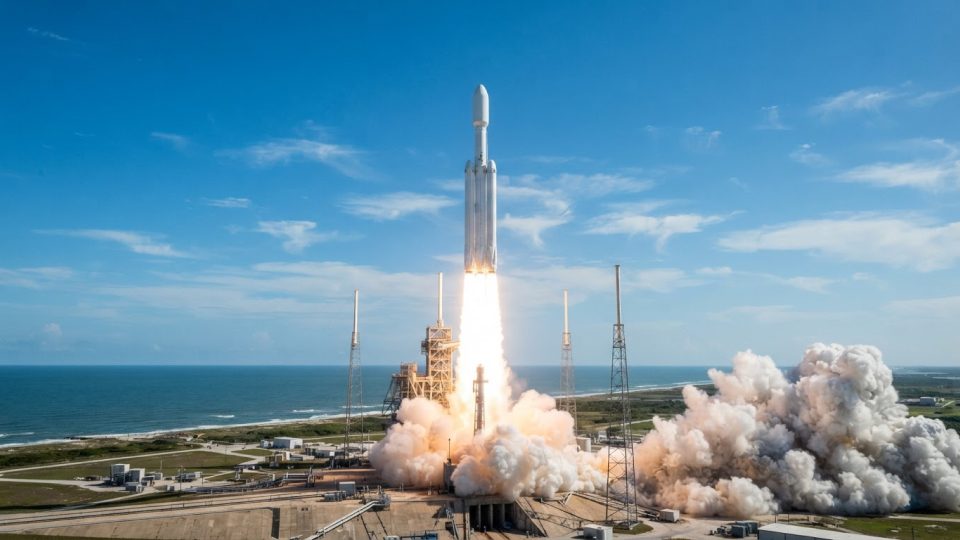
The government will conduct space environment demonstration of domestically-developed artificial intelligence (AI) semiconductors through the seventh Nuri rocket launch scheduled for 2028.
According to the roadmap, a 100kg-class small "space data center verification satellite" will be loaded as a secondary payload aboard the Nuri rocket's seventh launch scheduled for November 2028. The satellite will be equipped with a domestically-developed neural processing unit (NPU), to verify that AI computational performance, power supply, and heat dissipation technologies function properly in the actual space environment.
Why a data center in space?
AI data centers require massive amounts of power and cooling. In space, continuous solar power can be received, and competition for land and power resources on Earth can be avoided—a point drawing attention. However, challenges remain in radiation, heat generation, and launch costs.
The government aims to implement actual AI services with a 500kg-class medium-sized space data center by 2031, and to develop a large-scale space data center by 2034. The plan is to build a privately-driven space AI industry ecosystem by 2035.
Reference: Related reports on government space AI roadmap announcement (November 2)
Join the discussion
Loading discussion…